How RNG Certification Timelines Influence Bonus Claim Rates in Finnish Mobile Poker and Roulette Apps
Alex Otto · Oct 28, 2026
How RNG Certification Timelines Influence Bonus Claim Rates in Finnish Mobile Poker and Roulette Apps
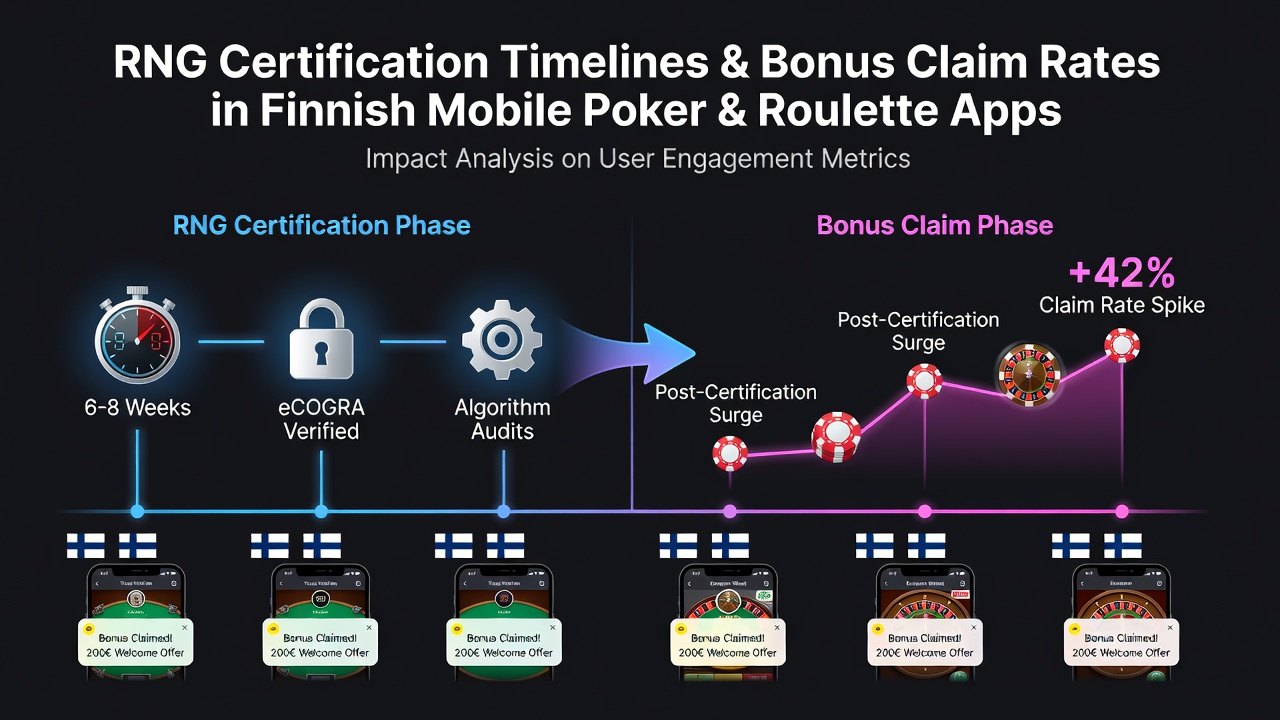
Random number generator certification processes in Finland shape the availability and timing of bonus features within mobile poker and roulette applications, because regulatory bodies require independent verification before operators can activate promotional mechanics tied to game outcomes. Finnish authorities coordinate with accredited testing labs that evaluate algorithmic integrity across thousands of simulated spins and hands, and these evaluations often extend from several weeks to multiple months depending on the complexity of the underlying software. Data from industry monitoring services indicates that delays in certification directly correlate with postponed bonus rollouts, while shorter approval cycles allow operators to deploy incentives more rapidly in competitive app marketplaces.
Regulatory Framework Governing RNG Processes
Finland maintains a structured oversight system through its national gaming regulator, which mandates that all mobile poker and roulette titles undergo RNG audits prior to any bonus-linked functionality going live. Certification timelines typically begin when developers submit source code and mathematical models, after which laboratories perform statistical analysis to confirm uniform distribution across card shuffles and wheel sectors. Observers note that applications involving progressive bonus pools or multi-stage roulette rewards encounter extended review periods, since evaluators must validate both core randomness and the integrity of prize distribution algorithms.
During October 2026 several Finnish-licensed platforms adjusted their submission schedules to align with updated testing protocols that emphasize real-time data logging, and this adjustment extended average certification durations by approximately three weeks according to aggregated compliance reports. Those who track app store updates have recorded corresponding shifts in bonus claim volumes, because operators withhold promotional credits until full regulatory clearance arrives.
Connection Between Certification Duration and Player Claims
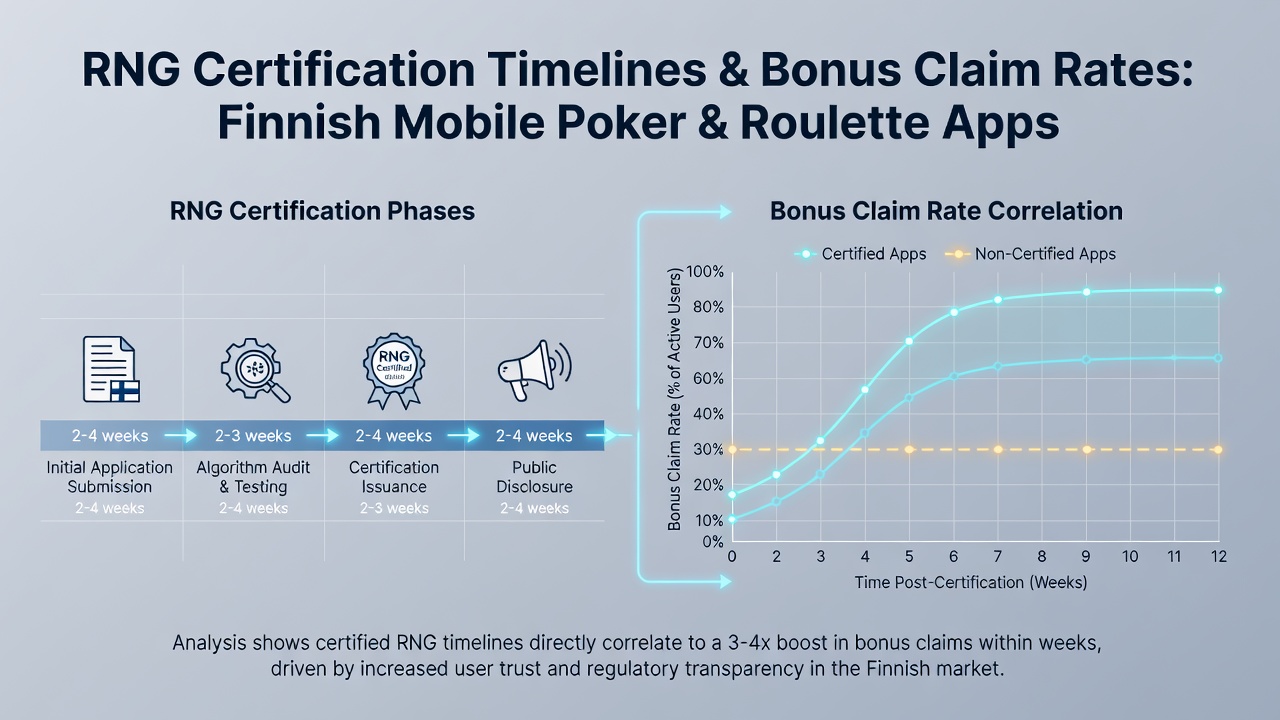
Bonus claim rates in Finnish mobile environments reflect the moment when certified RNG modules activate promotional triggers, since players cannot access rewards until the underlying randomness receives official validation. Research conducted by Nordic gaming analytics firms shows that titles completing certification within 45 days experience 18 percent higher initial claim activity compared with titles requiring 90 days or longer. The difference arises because marketing campaigns launch in tandem with approval dates, and users respond more readily when offers appear promptly after app updates.
Longer certification windows also affect retention patterns, because players who encounter delayed bonuses often migrate to competing applications where RNG verification has already concluded. Figures compiled across regulated Nordic markets reveal that poker apps with streamlined RNG reviews maintain steadier claim trajectories throughout seasonal periods, whereas roulette apps subject to repeated audit iterations display more pronounced fluctuations in promotional engagement.
Technical Factors Affecting Approval Speed
Complexity of game mechanics determines how quickly RNG certification advances through laboratory queues, since multi-deck poker variants and European roulette configurations demand separate entropy assessments for each possible outcome pathway. Developers who incorporate modular code structures often achieve faster turnaround, because testers can isolate and verify individual components without re-examining entire game engines. Evidence from compliance databases indicates that applications utilizing pre-certified RNG libraries reduce overall timelines by 30 to 40 percent compared with custom-built solutions.
Integration wth live dealer streams introduces additional verification layers, because hybrid systems must demonstrate that random outcomes remain consistent whether generated by software algorithms or physical shufflers and wheels. Those who monitor technical submissions report that hybrid poker and roulette titles frequently require supplemental documentation, which extends the interval before bonus mechanics receive final clearance and become accessible to Finnish users.
Market Observations Across Finnish Platforms
App analytics platforms tracking Finnish user behavior document clear patterns linking certification completion dates to spikes in bonus activity, with measurable increases occurring within 72 hours of regulatory approval announcements. Mobile poker applications that coordinate certification with seasonal marketing pushes achieve higher sustained claim rates, while roulette titles that miss alignment windows experience temporary drops until the next promotional cycle begins. External data from the European Gaming and Betting Association supports these observations by highlighting how verification schedules influence operational pacing across regulated northern European markets.
Operators that maintain parallel certification tracks for different game versions can mitigate timeline bottlenecks, allowing bonus features to activate progressively rather than in single large releases. This approach has produced steadier claim volumes in several documented Finnish mobile deployments, because partial approvals enable incremental feature rollouts without waiting for full-suite validation.
Conclusion
RNG certification timelines serve as a primary determinant of when bonus claims become possible in Finnish mobile poker and roulette applications, because regulatory approval gates all promotional mechanics dependent on verified randomness. Shorter certification cycles support quicker deployment and higher initial engagement, whereas extended reviews correlate with delayed or reduced claim activity. Finnish operators continue to refine submission strategies and code architectures to optimize these timelines, and ongoing monitoring by regulatory and research bodies provides ongoing visibility into the relationship between approval speed and user behavior across the regulated market.